Authors: Jestina Kanneh-Jaward, Cillian Quinn, Khardiata Ndoye, Karolina Karlsson, Fanta Jatta- Sowe, Vittoria Pugliese and Benedetta Balmaverde
To mark the International Day of Zero Tolerance for Female Genital Mutilation 2022, we wanted to showcase the work being done around the world by ActionAid offices to end the practice of FGM.
ActionAid’s work on FGM
Female Genital Mutilation (FGM) is an immense violation of human rights, a form of gender-based violence (GBV) and a clear demonstration of gender inequality. It can strip women and girls of their right to a life of freedom, dignity, and equality.
For ActionAid, a world free from Female Genital Mutilation is crucial to our work everywhere. We work with communities all around the world to lead discussions and actions on ending the practice. We work in solidarity and learn from one another as we carry out our work from Liberia to Ireland, Senegal to Sweden and The Gambia to Italy.
Read below to get a snapshot of what different ActionAid countries are doing to tackle the devastating practice of FGM across the world.
Liberia
Liberia has a high prevalence of FGM, with just under 40% of women aged between 15-49 having undergone the practice. It is one of few countries in West Africa that does not have a law criminalizing the practice. ActionAid Liberia plays a leading role in the country to highlight the negative consequences of the practice and advocates for change at a community and national level. Using the Human Rights Based Approach, ActionAid focuses on stakeholder engagement, working with the rural women networks, youth, traditional & religious leaders and other community leaders.
At national level, ActionAid Liberia have established and continue to support the National Working Group against Female Genital Mutilation. This group aims to eliminate FGM in Liberia through dialogues, advocacy and awareness campaigns.
At a community level, using the methodology of Reflection Action, ActionAid works with communities who have deeply entrenched views on FGM that the practice should stop. They have established fifty boys and girls forums where they enhance the discussion and awareness amongst young people.
ActionAid Liberia has made significant investments in women and girls rights over the years, but FGM has been one of the biggest challenges as it reverses these gains. FGM continues to fuel inequality between men and women in Liberia with large portion of girls missing years of education and also in most cases ending up as child brides.
Ireland
According to Central Statistics Office (CSO) data from 2016, an estimated 5,790 women and girls in Ireland have endured FGM. ActionAid Ireland has been delivering anti-FGM projects since 2016, to prevent FGM through empowerment and awareness-raising activities. This work is targeted at migrant women living in Ireland with a focus on those who are predominately from FGM practicing countries. The project also works to educate people regarding the laws that relate to FGM in Ireland. (It is illegal to practice FGM in Ireland or to remove a girl from the state to practice FGM in another state).
In a European context, the practice of FGM is usually targeted at schoolgirls where FGM ceremonies are planned in their parent’s home countries coinciding with holiday breaks. Due to restrictions on international travel and school closures owing to the Covid-19 pandemic there were fears the practice would be driven underground in Ireland. Therefore, ActionAid felt it was critical to keep the project going despite of the pandemic and continued to deliver this important work. As the project could not be delivered face-to-face due to coronavirus restrictions, the project was carried out online with migrant women across Ireland. ActionAid Ireland uses the Reflection Action approach that is championed by ActionAid globally and has proven successful in projects across Africa and Asia. The AFTER project is an example of learning from successes from projects in the Global South and bringing them to the Global North.
At a national level ActionAid Ireland are represented on the National Steering Committee for Ending FGM where they work with partners to ensure the practice is ended for people living in Ireland.
Senegal
Senegal has a prevalence rate of approx. 23% of FGM amongst women between the ages of 15-49, even though the practice has been outlawed in the country since 1999. ActionAid Senegal play a central role throughout Senegal in ensuring that the commitments made in 2063 African Agenda which sets out an aspiration that FGM is completely eliminated in Africa are met. They do this through their work at a community and national level.
ActionAid Senegal carry out extensive awareness raising activities at community level through information programmes with women leaders to make people understand the risks of FGM. They also run education programmes where they promote information regarding the laws with regards to FGM and also produce and disseminate communication material that help visualize the danger related to FGM.
ActionAid Senegal is that the practice remains common in hard to reach communities in Senegal. That is why AAS focus their work on the regions where the practice is most entrenched.
Although ActionAid Senegal has seen progress in their work, they are still seeing communities across Senegal travelling to border regions to carry out FGM on children, often happening just after the birth of a child. Like the experience of Liberia, ActionAid Senegal are seeing their hard-fought battles eroded by this practice and will therefore continue to work on the issue to support vulnerable communities across Senegal who are at risk of FGM.
Sweden
Sweden is one of the European countries with the largest population originating from FGM risk areas, and official numbers show that at least 38,000 women have undergone FGM and another 19,000 are at risk. For this reason, ActionAid Sweden saw that there a big need to increase knowledge and build capacity among different stakeholders in Sweden to end the practice.
ActionAid Sweden has been working to prevent and raise awareness around FGM in Sweden since 2016. They spread information, create knowledge and change attitudes around the practice. They work with people at risk, survivors, professionals and civil society actors to build bridges and to create safer spaces for reflection, using participatory methodologies including Reflection Action. Their work also involves advocacy work, where we engage decision makers to create change at a policy. Like ActionAid Ireland, since the pandemic began they have adapted their methodology to the digital space, carrying out Reflection Action circles online.
Although FGM may not be as prevalent in Sweden as it is in other countries, one case is too many and ActionAid Sweden will continue to address this issue as FGM is a violation of the international declaration of human rights and the convention of the rights of the child, both of which Sweden is a signatory of.
The Gambia
The Gambia has a very high rate of FGM, with almost 75% of women aged 15-49 circumcised and 44% of girls aged 0-14 have been circumcised. This is despite the fact that The Gambia has laws prohibiting the practice since 2015. Unfortunately, very few prosecutions have happened since the law was passed. ActionAid The Gambia have worked extensively since 2006 on this issue and are a leading voice throughout the country on bringing an end to FGM.
At a national level, ActionAid has participated in a lot of advocacy work for the abolishment of FGM in the Gambia and have taken several practical steps towards this, including research and advocacy work. See a video showcasing ActionAid The Gambia’s work to end FGM. They are also members of the National steering committee that coordinates the implementation of the National action plan to accelerate the abandonment of FGM and continue to influence decisions and putting pressure on government to enact the Anti FGM Bill.
At community level, ActionAid The Gambia have trained religious and traditional leaders on the anti-FGM law to stop the practice using Reflection Action tools such as “Stepping Stones”. They have also conducted national wide, community based, anti FGM tours collecting demands from grassroots community members which were later handed over to national assembly members. ActionAid the Gambia strongly believe that sustainable change in ending FGM can be attained through meaningful involvement of young people to break the cycle of FGM.
Italy
Within its national programme for promoting women rights and combating any form of gender-based violence, ActionAid Italy has been working on prevention and combatting of FGM since 2016. They coordinated the AFTER Project (Against FGM/C through empowerment and rejection) that Sweden and Ireland also took part in. Since September 2020, ActionAid Italy has built on its previous work on FGM and is now implementing the CHAIN Project. The project aims to prevent and fight FGM and early and forced marriage in Europe through empowerment and awareness-raising activities. It ensures the direct involvement of diaspora communities with the help of community trainers, as well as the establishment of multiagency intervention chains at the local level.
The most recent official data concerning Italy refer to 2019 and were collected by the University of Milano Bicocca. According to their estimates, 87,600 women and girls living in Italy had undergone female genital mutilation, out of which 7,600 were underage (predominately from Nigeria and Egypt). It found that there are approx. 5,000 girls who are at risk of FGM in Italy. The research involved speaking with women of the communities mostly affected by FGM, including Egypt, Senegal, Nigeria, Burkina Faso, Ivory Coast, Ethiopia, and Guinea. 42% of those interviewed were not in favour of the practice with 37.5% actively opposing the practice in their own country and Italy. The research did however find that 9.4% are in favour of FGM. While numbers are decreasing, there are women and girls in Italy that are still at possible risk of FGM. Therefore, ActionAid Italy is committed to continuing its work in ending this harmful practice through its national programme.
Thank you
As you have read, ActionAid have a global commitment to end FGM everywhere, whatever the context. We will continue to work in solidarity to achieve this.
ActionAid Ireland also have a strong programme of work in Kenya, to read and support that work follow the link: https://actionaid.dev10.effectordev.ie/donate-now-help-end-fgm/
Thank you for reading.
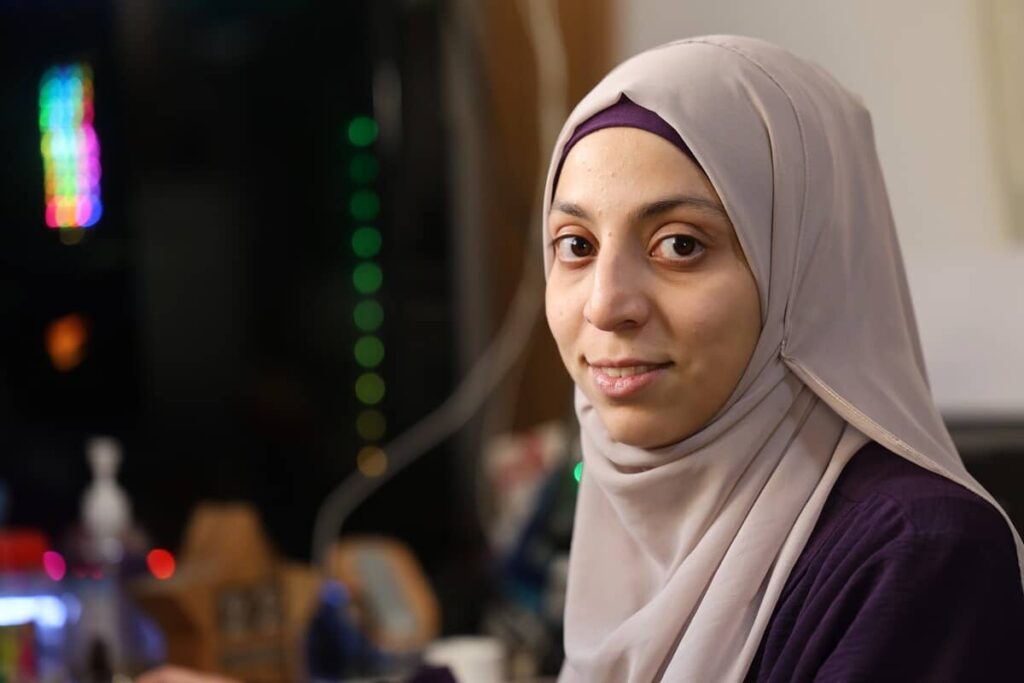
Photo credit: Amina, a midwife from Taveta, Kenya, who is fighting to end FGM. (Credit: Cynthia Peter/ActionAid)