As Ireland’s political leaders prepare to visit the United States for St. Patrick’s Day, they carry more than a diplomatic mission—they carry a moral responsibility. With authoritarianism and extremism on the rise in the U.S and globally, these visits come at a time of turbulence. Decisions made by a major global power like the US will inflict global chaos from the dismantling of aid programs to the gutting of climate commitments and the erosion of human rights.
Taoiseach Micheál Martin (Texas and Washington DC), Tánaiste Simon Harris (Philadelphia and New York), Darragh O’Brien (Miami and Los Angeles), Peter Burke (Boston and New Hampshire), Dara Calleary (Atlanta and Savannah), Patrick O’Donovan (Seattle and San Francisco), Jennifer Carroll MacNeill (New York and Chicago), and Alan Dillon (Utah and Vancouver) will be meeting with U.S. officials from across the political spectrum.
There are dangerous shifts taking place under the Trump administration and we must call them out.
The moment we are now living in demands courage. The rise of authoritarianism, the scapegoating of marginalized communities, and the destruction of international norms should set off alarm bells for Ireland’s representatives. Here are five critical areas where they must take a stand.
1. Palestine – Condemn illegal occupation, aid blockades, forced displacement and champion human rights
On 4 February 2025, President Trump, alongside Israeli Prime Minister Benjamin Netanyahu, suggested the U.S. “take over” Gaza and forcibly relocate its over two million Palestinian residents, branding it an economic opportunity rather than acknowledging their rights. This proposal, widely condemned as ethnic cleansing, violates international law. Trump’s plan blatantly breaches the Fourth Geneva Convention, which prohibits the forced displacement of occupied populations. His rhetoric normalizes ethnic cleansing, escalates regional instability, and disregards Palestinian rights.
Key asks that the Irish delegation should raise:
- Uphold international law: Ireland calls on the U.S. to abandon any plans involving the forced displacement of Palestinians and to respect international legal frameworks that protect human rights, protect against war crimes and atrocities.
- Restore humanitarian aid: Urge the U.S. to reinstate funding to UNRWA to ensure the continuation of vital services that support the well-being of Palestinian refugees.
- Promote lasting and long-term peaceful solutions: Advocate for diplomatic efforts that engage all stakeholders in pursuing a just and lasting peace, recognizing the rights and aspirations of both Palestinians and Israelis.
Ireland must continue to stand in solidarity with the Palestinian people and emphasizes the importance of upholding international law as the foundation for any sustainable resolution to the conflict.
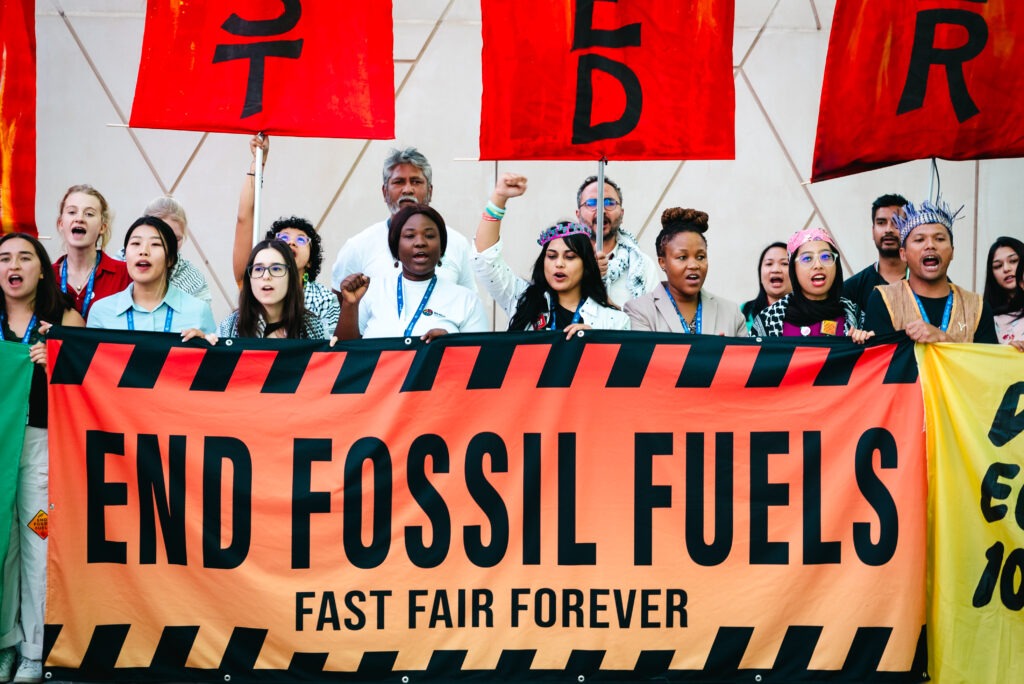
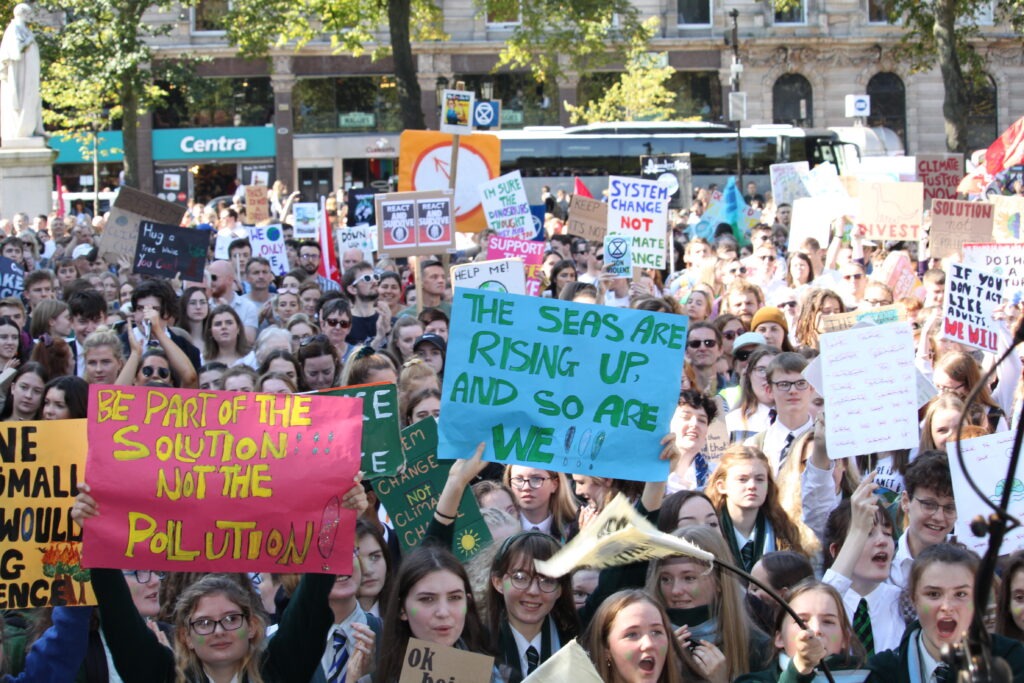
2. Climate – Challenge the US withdrawal from the Paris agreement and the dangerous plans to expand fossil fuel production
In January 2025, President Trump withdrew the U.S. from the Paris Agreement for the second time, signing Executive Order 14162. He also established the National Energy Dominance Council to accelerate fossil fuel production, despite 2024 being the hottest year on record, surpassing the critical 1.5-degree Celsius threshold. This withdrawal undermines global climate efforts, isolating the U.S. despite its status as a top historical polluter. Expanding fossil fuel production defies scientific consensus and accelerates climate disasters, disproportionately harming vulnerable communities worldwide.
Key asks that the Irish delegation should raise:
- Recommit to global climate initiatives: Ireland urges the U.S. to rejoin the Paris Agreement and collaborate with the international community to achieve the accord’s objectives.
- Transition to sustainable energy: Encourage the U.S. to invest in renewable energy sources and phase out reliance on fossil fuels, aligning national policies with global climate goals.
- Honor climate finance obligations: As a major emitter, the U.S. has a responsibility to support the Global South in their climate adaptation and mitigation efforts through financial and technical assistance.
Ireland needs to remain steadfast in its commitment to addressing climate change and should call on the U.S. to fulfil its obligations, recognizing that collective action is essential to safeguard our planet for future generations.
3. USAID – Stand against the dismantling of global solidarity
Shortly after his inauguration, President Trump froze nearly all foreign aid for 90 days, halting thousands of humanitarian and development programs and leading to mass layoffs, including 2,000 USAID workers. With Elon Musk’s Department of Government Efficiency (DOGE) pushing to dismantle USAID, the freeze has sparked legal challenges, but many agencies have already ceased operations. As the largest foreign aid donor, the U.S. provided $72 billion in 2023. This freeze disrupts critical health, education, and food security programs, worsening conditions in fragile regions. It also strips grassroots initiatives of essential resources, while explicitly excluding gender, diversity, abortion, and transgender services, further marginalizing at-risk groups.
Key asks that the Irish delegation should raise:
- Reinstate and protect foreign aid: Ireland urges the U.S. to immediately lift the aid freeze and resume funding to critical programs that support global health, education, and development.
- Honor international commitments: As a leading global power, the U.S. has a moral obligation to support international development and humanitarian efforts, especially given its significant influence on global stability.
Ireland needs to remain committed to being a champion of solidarity and should continue to support global development initiatives whilst urging the U.S. to uphold its responsibilities in fostering a just and equitable world.
4. Gender Equality – Resist regressive policies and protect hard fought rights
In his second term, President Trump has escalated attacks on gender equality, banning gender-affirming care for minors, restricting transgender participation in sports, and reinstating the Global Gag Rule to limit reproductive health access. These efforts align with a broader movement to roll back women’s and LGBTQ+ rights under the guise of opposing “gender ideology.” These policies violate human rights and reverse decades of progress. Banning gender-affirming care ignores medical guidelines and endangers transgender youth, while restricting reproductive rights increases unintended pregnancies and maternal mortality. Labelling equality efforts as “gender ideology” is a calculated move to enforce traditional norms and suppress diversity.
214 million women of reproductive age in low-income countries aren’t having their needs met when it comes contraception, and this accounts for 84% of all unintended pregnancies. If these women had access to contraception, the number of unintended pregnancies, unplanned births and abortions would drop by nearly three quarters.
Key asks that the Irish delegation should raise:
- Uphold women’s rights: Ireland calls on the U.S. to respect and protect the rights of all individuals, regardless of gender identity or sexual orientation in its foreign policy and domestically. Combat the misuse of “gender ideology” rhetoric that seeks to undermine equality and justify discrimination.
- Reject regressive policies and drop the Global Gag rule: Bringing back the global gag rule means organisations that provide information about or referrals to abortion services, or do any advocacy in support of abortion access, will have their aid restricted.
Ireland should ultimately stand in solidarity with those affected by these regressive policies and urges the U.S. to reaffirm its commitment to gender equality and human rights.
5. Ukraine – Counter misinformation and support sovereignty
President Trump’s recent mischaracterizations of the Ukraine conflict—falsely accusing Ukraine of initiating war and labelling President Volodymyr Zelenskyy a “dictator”—not only distort historical facts but also undermine international support for Ukraine’s sovereignty. Such narratives disregard the immense suffering endured by the Ukrainian people. The conflict, now in its third year, has resulted in over 12,000 civilian deaths and displaced more than 10 million individuals, creating Europe’s largest displacement crisis since World War II.
Key message:
- Reaffirm Ukraine’s sovereignty: Ireland stands firmly with Ukraine, supporting its sovereignty and territorial integrity.
- Condemn misinformation: It is imperative to challenge and correct false narratives that distort the reality of Russia’s aggression and Ukraine’s right to self-defence.
- Support democratic leadership: Recognize and uphold the legitimacy of Ukraine’s democratically elected government, rejecting unfounded claims that undermine its authority.
Ireland must be a voice for international law
Each of the officials traveling to the U.S. must make it clear that Ireland stands for international law. They must challenge those who pander to authoritarianism inside the Trump administration and confront a complacent opposition.
Ireland has always been a voice of principle and for human rights on the world stage. Now is the time to raise that voice louder than ever.
Read more about our work here.