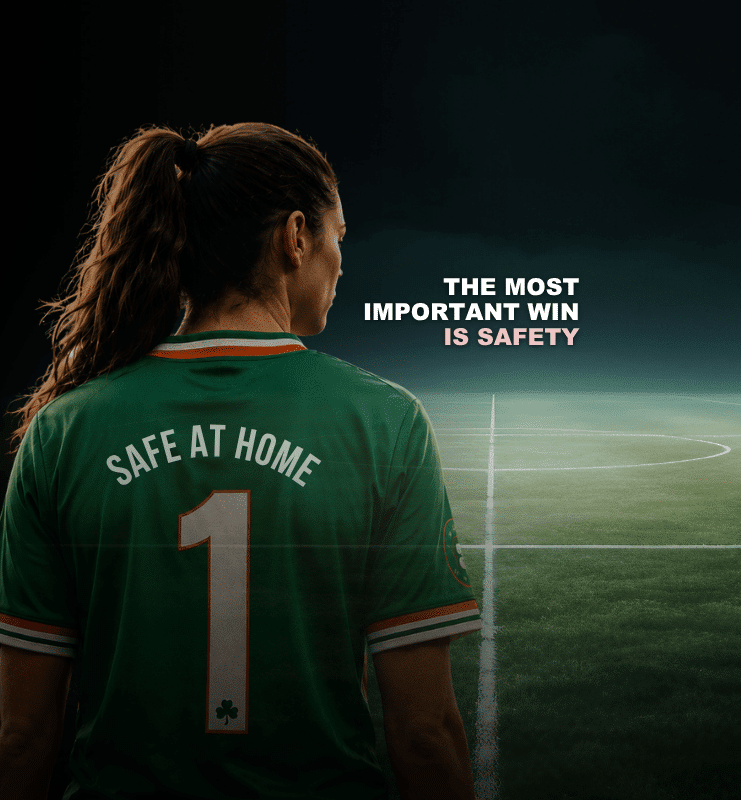
No law at international level to protect workers from harassment but Irish people unaware
Governments, employers and trade unions are negotiating the first ever international law on ending violence and harassment in the world of work at the International Labour Conference (ILC) in Geneva. ActionAid is calling on all parties to agree a strong, binding treaty that protects women and other marginalised workers.
Today, ActionAid is releasing the findings of a survey of Irish consumers to coincide with the conference. When surveyed, only 37 per cent of Irish people knew that there is currently no law at an international level to eradicate gender-based violence and harassment in the world of work.
Most (82 per cent) say they care about the conditions in the factories where their clothes are made, but 65 per cent say it’s hard to know which brands are ethical. 82 per cent of Irish consumers said that if a clothing brand was exposed to in the media because its clothes are made in factories where women face sexual violence and harassment, they would stop shopping there immediately.
The survey finds 28 per cent believe that governments are responsible for ensuring clothes are produced in an ethical way in factories where workers are paid a living wage and work in decent conditions, free from violence and harassment and 38 per cent believe it should be the employers.
Research from Bangladesh
The global justice organisation also surveyed 200 garment factory workers, including 181 women, in Bangladesh’s capital Dhaka, found that 80 per cent said they had experienced or witnessed sexual harassment and/or abuse at work.
Witnessing a colleague sexually assaulted on the factory floor, women abused for not meeting targets and another fired for being pregnant – these are just some of the shocking experiences of violence and harassment garment workers in Bangladesh have shared with ActionAid.
ActionAid’s research finds that 73 per cent of Irish consumers wouldn’t work somewhere where workers face gender-based violence and 80 per cent would be unwilling to work in unsafe buildings, left in a state of total disrepair.
But garment workers in Bangladesh face these conditions on a daily basis. Six years after the Rana Plaza tragedy that killed more than 1,100 people, all the garment workers surveyed reported some level of concern over safety in or around their workplace. Ninety per cent said their jobs were impacting their heath, with issues including damaged eyesight, injuries to hands and feet, severe back pain, exhaustion and depression.
Siobhan McGee, CEO of ActionAid Ireland, says:
“The #MeToo movement has brought the issue of sexual violence and harassment at work to the fore. But, the most vulnerable, marginalised and underpaid workers cannot be left out. Governments and employers now have the opportunity to act by voting in favour of the first international law to tackle gender-based violence in the world of work.
“Right now, 59 countries still have no national laws against violence and harassment at work, and so a progressive, binding, global treaty is the only way to protect women and other marginalised workers.
“Our research shows that the majority of Irish consumers believe it is the responsibility of governments and brands to protect workers in global supply chains, such as the garment industry.
“Consumers, hit by austerity measures and rising global inequality, face tough choices when the only clothes they can afford are cheap, fast fashion that puts garment workers at risk of abuse. It’s up to brands and governments to ensure that the decision to buy ethical clothing is not only a choice the rich can make.”
Farah Kabir, country director of ActionAid Bangladesh, says:
“Many garment manufacturers are taking important steps to improve building safety. Now it is time to tackle the gender-based violence that is still a daily reality for many of the women who make the clothes we wear.
“Governments and employers in Geneva this week can change that by backing legislation to protect all women, regardless of where they work, and make sexual violence and harassment unacceptable in any workplace, anywhere.”
Garment worker stories: “This piece of cloth is bathed in my blood, sweat and dignity”
Shopna* has been a garment worker for 16 years and now operates a sewing machine. Over the years, she says, she has experienced many unwanted sexual advances and witnessed incidents of assault on other women by men in positions of authority.
She had a powerful message for the people who buy the clothes she makes:
“It makes me happy that they are wearing something that I made. But I want to let them know that this is more than a piece of cloth. This piece of cloth is bathed in my blood, sweat and dignity. I’ve sacrificed all of that to be able to make a pair of pants [trousers] that you will wear and feel comfortable.”
Shopna faced harassment from a factory manager who would make inappropriate comments and touch her. He repeatedly asked her to stay back after work, but she refused. One morning when she was in earlier than other workers, he violently attacked her.
ActionAid’s survey of garment workers found 72% of the respondents said they had been subjected to extreme verbal abuse at work.
Many of the workers surveyed reported being grabbed, groped and hit on the head for not meeting their targets. One woman, Parul, said that one day something “indecent” happened while most other workers were out for lunch. It is understood that a woman was sexually assaulted on the factory floor.
Another woman said: “If we are unable to meet the required state of production, the supervisor swears at us, beats us, or proposes something revolting. If we do not comply then we are harassed repeatedly, verbally and digitally [via mobile phone].”
Many said they complained about the behaviour of male supervisors, but nothing was done to address their behaviour.
“They grope and push us when we are unable to meet the production target,” one woman said. “They also swear a lot. We complained to the [manager], who also didn’t pay any heed and in turn swore at us too and threatened to throw us out. We all wish to continue working only for the sake of our family. If they stop this then we can work peacefully.”
Notes:
ActionAid’s full analysis of the survey of garment workers in Bangladesh is available on request.
*Pseudonyms have been used to protect workers’ identities.
ActionAid commissioned the Centre for Development Communications to survey 200 garment workers in May 2019. ActionAid International worked closely with colleagues at ActionAid Bangladesh to ensure that the survey of garment workers was carried out in a sensitive way that was mindful of the harrowing experiences they were being asked to share and recognises that asking questions about this subject area can be re-traumatising. The workers were briefed about the content of the questionnaire before taking part, offered the choice not to answer any questions they found distressing, and those who had experienced or were still experiencing sexual violence and harassment were given information about services that could support them. The workers who took part attend Workers’ Cafés, supported by ActionAid Bangladesh in Dhaka where they receive information and support about their rights.
The survey used the World Health Organisation definition of sexual violence, also sometimes described as gender-based violence: “Any sexual act, attempt to obtain a sexual act, unwanted sexual comments or advances, or acts to traffic, or otherwise directed, against a person’s sexuality using coercion, by any person regardless of their relationship to the victim, in any setting, including but not limited to home and work.”
YouGov carried out online surveys of 6,958 adults, on behalf of ActionAid, between 20 and 30 May 2019, in the UK (2,187), Ireland (516), the Netherlands (1,018), Sweden (1,016), the USA (1,224) and Australia (997).