A powerful new photo book from ActionAid Bangladesh captures the inspiring stories of six women who have seen their dreams come true to become sustainable farmers in the face of climate change.
In the early days of her marriage, two square meals a day were a luxury for Gulshan Ara. Her husband did his best to provide for the family, but for years crops were destroyed by floods and drought due to climate change. Food was scarce.
But today, Gulshan is building a better future for her family, as well as her community, thanks to support from ActionAid.
Gulshan is one of 500 women who have taken part in a climate friendly agricultural programme with ActionAid Bangladesh and civil society partners. Agriculture is the cornerstone of the economy in Bangladesh and is driven by women, who make up 70% of the agriculture workforce.


Despite their central role in agriculture, women farmers in Bangladesh face marginalisation and restricted access to markets, forcing them to sell their produce at lower prices. Additionally, the lack of business skills hinders their ability to engage effectively.
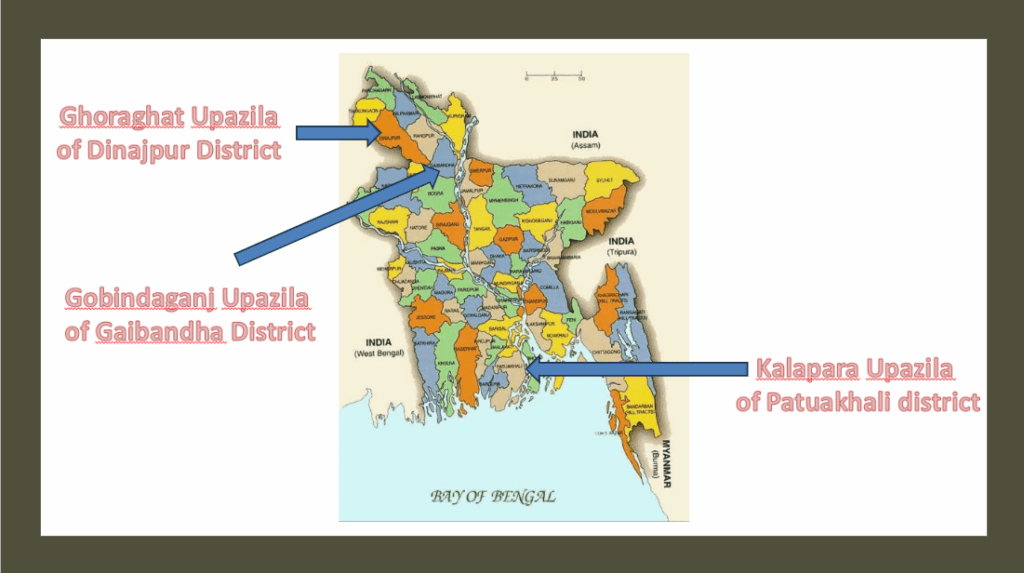
To address these challenges ActionAid Bangladesh has completed a project titled ‘Women-led Solutions to Food Insecurity and Livelihood in the Face of Climate Change’ which was successfully implemented in three districts – Ghoragat Upazila in Dinajpur, Gobindaganj Upazila in Gaibandha, and Kolapara Upazila in Patuakhali.
Women received training on various climate-resilient agricultural techniques, soil health, seed saving, composting as well as establishing cooperatives among women farmers to collectively cultivate land and store and transport their produce.
As part of the project, ActionAid Bangladesh and partners have supported women to organise themselves so they can raise their voices with the Bangladesh government. This is particularly important as there are provision in national legislation (Agricultural Bill 2018) that recognise the rights of women farmers but too often they are left out at the local level when it comes to accessing financial support for agricultural inputs, training and technical support, and loans for growing their businesses.


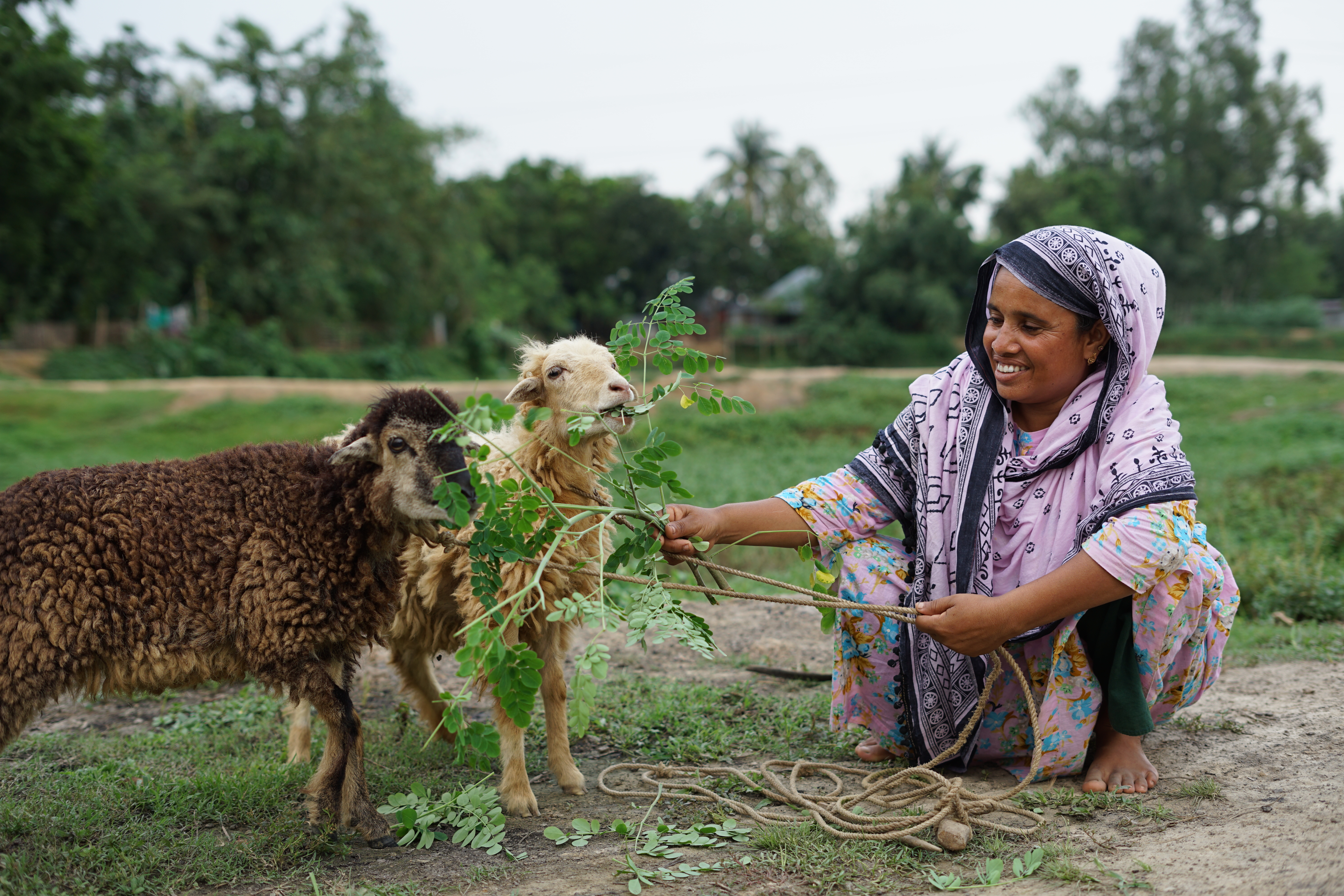
To mark the end of the project, ActionAid Bangladesh produced a spectacular photo book titled ‘Harvesting Her Dreams’ which captures the achievements of smallholder women farmers, their progress in adopting sustainable agricultural practices and embracing empowerment.
Apa Rani
“I want to ensure a better future for my daughter. She wants to become a doctor. I want to be the support system in ensuring her dream.”
As Apu Rani plucks the guava (a tropical fruit) from her garden for her daughter, she thinks about how life has come full circle.
Apu remembers when her father taught her gardening, and smiles as she recalls fruit she planted with him when she was about 12-13 years old. She heard about ActionAid’s “Women-led Solutions to Food Insecurity and Livelihood in Face of Climate Change” project, and joined the programme where she learned new cultivation techniques.
With a loan, she purchased ducks and goats which multiplied and opened an alternative livelihood for her. She passed on all she learned to her husband, who is also a farmer, and to her teenage daughter.
Bulbuli Begum
“Enrolling my son at ActionAid’s Child Space was one of the best decisions of my life. Since then, ActionAid Bangladesh has become my guiding star. They helped me build an identity for myself.”
After dropping out of school as a young girl, Bulbuli was married off and faced abuse and violence. She thought this was her fate until she enrolled in an ActionAid Bangladesh programme which gave her the courage to take charge of her life.
Under the programme 37 women from Bulbuli’s village started a women’s farmer group. A savings scheme was established, with Bulbuli as cashier. Gradually, she earned people’s trust and was elected as President of the group which became part of the Farmers’ Federation.
Bulbulin has built relationships with government offices and has helped obtain agricultural supplies and allowances for others in her village. She has also played a vital role in establishing a women’s farmers market.
Gulshan Ara
“Now when I look back to the days when two meals were a luxury, the reality of today seems like a dream. We can have fish, meat and eggs any day we want. I never thought we would see a day like today.”

For years, crops on Gulshan Ara’s farm were destroyed by floods and drought. But today, Gulshan is a winner of two prestigious awards and is building a better future for her family, and her community.
Gulshan enrolled her grandchild in an ActionAid Bangladesh programme, Child Space. From there she enrolled in the ActionAid climate change agriculture project where she learnt about cultivating diversified plants and vegetables. This allowed her grow enough to meet the food needs of her family, and with a surplus she was able to save money and buy an extra plot of land.
Sumona Begum
“It has been quite some time that I haven’t bought vegetables from the market. It saves us a handsome amount of money and I think small steps like this contribute to major household income.”
Sumona Begum has always been a dreamer, determined to see her goals reach reality. She overcame many obstacles and challenges and today is known as an inspiring instructor and entrepreneur in her village.
Her pathway to success started when Sumona enrolled her daughter in Child Space, run by ActionAid Bangladesh. Through this engagement, she joined another ActionAid programme and attended training in tailoring. She also joined the ‘Rajanigandha Women Farmers Group’ where she received agriculture training.
Sumona’s tailoring business is going strong and has become her main livelihood, while income from her farming enterprise has helped her upgrade her house and establish a tailoring group.
Tania Begum
“It often gets difficult for us women to sell our produce in the village market. Our women friendly market works as a safe space for many women like me. Once a week we come here with our products and sell them to other women in the village.”
Mother of three Tania Begum is a tailor turned farmer who escaped the torture of her first marriage, and ran away nine years ago with her firstborn.
Settling down in Kolapara, Tania rented a house and bought a sewing machine. With the skills learned from working in a garment factory in Dhaka, she began her small tailoring business.

Tania heard about ActionAid’s agricultural programme and enrolled and received training on gardening, poultry rearing, and compost production. She also became a committee member of the women friendly market and bought ducks and chickens to supplement her income.
Today, Tania sells her tailored dresses, vegetable produce, chicken, and ducks in the women friendly market.
Farzana Akhter
“I couldn’t have discovered the entrepreneurial spirit in me if it wasn’t for ActionAid Bangladesh. Thanks to the training and support I got from them I learned about homestead gardening which helped me expand my earning.”
Farzana Akhter always had a knack for embroidery and design, and her first income was from selling embroidered quilts to one of her neighbours.
She got a job in a garment factory in Ghoraghat, Dinajpur, and worked tirelessly for a meagre pay. It was during this time that a community mobiliser from ActionAid Bangladesh enrolled Farzana in a project which helped her fulfil her dream to open her own tailoring shop.
Instead of focusing on the traditional designs, Farzana introduced city trends which proved very popular. Soon, girls and women from the village and afar started coming for her dresses and she trained her husband in tailoring to support in the business.
Farzana also learning about climate-resilient agricultural practices, and now grows vegetables not only for their family but also to sell in the women-friendly market. She is mentoring 25 other women, and helping them prosper.
Discover more about ActionAid Ireland’s work here.