Impact of Covid-19 Worldwide

ActionAid is adapting its programmes to ensure the most vulnerable aren’t left behind as it responds to Covid-19 worldwide.

The whole world is grappling with the Covid-19 pandemic. And the shadow-pandemic, which has seen all types of violence against women and girls intensify.

ActionAid is working with women who were already vulnerable to violence and exclusion. This work is part of our Women’s Rights Programme funded by Irish Aid. In this programme we use an innovative approach called ‘Behaviour Change’ which was developed by the Centre for Behaviour Change at University College London (UCL) to tackle health related issues. This is the first time it has been used in tackling gender inequality. UCL is working with ActionAid on covid-19 prevention within the programme.

Covid-19 Worldwide

Below three of our staff in Nepal, Kenya and Ethiopia share their experience of the pandemic. And how they are adapting to help the most vulnerable.

Nepal

Kopila Chaulagain lives in Parsa District in Nepal, with her husband and son. She is a Programme Coordinator with ActionAid. 
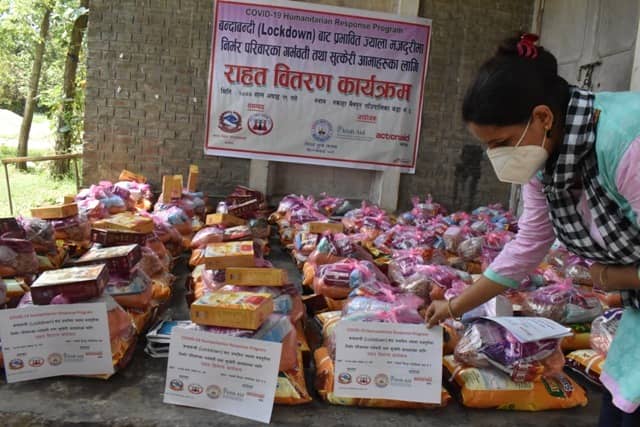
Kopila Chaulagain lives in Parsa District in Nepal, pictured organising aid packages for vulnerable women as part of ActionAid's covid-19 response worldwide
Kopila Chaulagain pictured organising aid packages for vulnerable women as part of ActionAid’s Covid-19 response in 2020.

“The pandemic has hit all wage earners the hardest, especially those working in the transport sector, street vendors, building workers, and others working class people. Women and adolescents have also been affected by violence as a result of the pandemic.”

“I met the families who are facing the worst conditions during this pandemic. One of my neighbours’ source of income was beauty parlour and rickshaw. During the lockdown, both sources of income were completely cut off. After a few days of running out of savings, they had a hard time to have a proper meal day. We supported them with vegetables, rice, lentil, flour. They have three children and had to face a very bad situation as the rickshaw could not run even after the lockdown was a little easier and the beauty parlour was not allowed to open. They were living in a rented house and their family was devastated when the landlord did not even give them a discount. This is just an example. There are many families facing bad situation like this.”

“We are conducting programmes for the economic empowerment of women and ending sexual harassment. Pregnant and lactating women have been affected during the pandemic so we have supported them with nutritious food and safety kits. We have also changed other activities and to focus on coronavirus response. We have planned to carry out activities including communication materials required for protection from impact and installing handwashing stalls.”

Kenya

Caroline Nkirote is Women’s Rights Coordinator with ActionAid Kenya. She lives in a town in Kenya called Voi that is in Taita Taveta county.

Caroline Nkirote unpacking dignity kits from an ActionAid vehicle, with another team member. Kishushe, Taita County, September 2020

“Women living in poverty and exclusion have been the most affected by the pandemic in my view. This is because women are the primary caregivers in the family setting. There was increased pressure on the family basket since schools were closed meaning children were home throughout the day and in many cases husbands who worked in towns were back home after the companies they worked for closed as a result of Covid 19. This meant more water and food were required by the household. In addition, there was scarcity of water in the community, hence women had to walk longer distances in search of water exposing them to violence.”

“Domestic violence was also reported to be on an increase and majority of those affected were women. Access to medical services like maternity health care was a challenge to marginalised communities. Especially during the times there was containment measures that restricted movement imposed by the government. Many women in need of medical services avoided going to hospital in fear of Covid 19 hence putting them at health risks. Initially, community health workers were unable to support mothers to be during curfew hours for fear of arrest and harassment from law enforcers. Access to sanitary towels was a challenge too, as a result of competing demands at the household level. Before Covid 19, school going girls could access the sanitary towels from schools.”

Cash Transfers

“I met a woman called Matilda,* who used to work as a domestic worker in Mombasa. Following the Covid 19 outbreak, the employer laid her off and was forced to stay in her small rented house in the city barely surviving and couldn’t travel home since there was travel restrictions. The landlord threw her out and she was forced to seek refuge temporary at her friends house. As soon as travel restrictions were lifted she packed up her bags and travelled to the village. She had no rent to pay at the end of the month but found herself struggling to even eat. She could send her mother some money when she worked but with no income she was not able to support her mother anymore. The family was in dire need of food and benefited from cash transfers supported by ActionAid Ireland.”  

“Cash transfer funds were funded by Irish Aid and gave us an opportunity to help people deal with the pandemic in an innovative way. These were done in three instalments that were dependent on each other. Each beneficiary committed to areas in their lives they would change. Some started poultry farming while others started small scale farming.”

Ethiopia

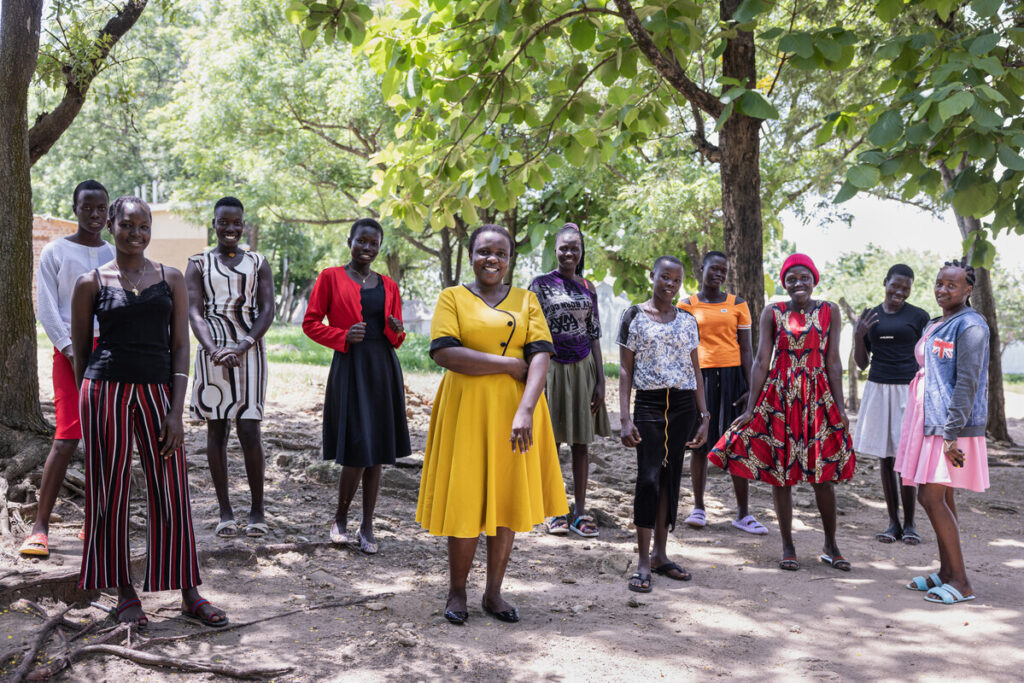
Mihret Bekete is Programme Coordinator with ActionAid Ethiopia. She lives in Debre Tabor town of Amhara Regional state, in mountainous northern Ethiopia.

Mihret Bekete, Programme Coordinator with ActionAid Ethiopia, on how ActionAid is responding to Covid-19 worldwide
Mihret Bekete, Programme Coordinator with ActionAid Ethiopia, pictured in 2020.

“I met a group of women who are members of a women’s saving and credit cooperative which is established with support from ActionAid. Their petty trade was affected by high inflation and decreased customers demand due to the pandemic, so for the first time they requested a loan repayment extension. These women live in poverty, are aged between 30 and 50, and have families. And they were unable to meet the basic needs of their family’s because of the pandemic.”

“As part of our response to the pandemic, we purchased and provided free hand contact foot pedal handwash to the institutions. We are starting cash support. And we are providing Covid-19 awareness information and training to communities.”

The ActionAid women’s rights programme is implemented in Kenya, Nepal and Ethiopia. The programme is funded by Irish Aid, Department of Foreign Affairs. Read more here.

ActionAid is responding to the pandemic caused by Covid-19 worldwide.
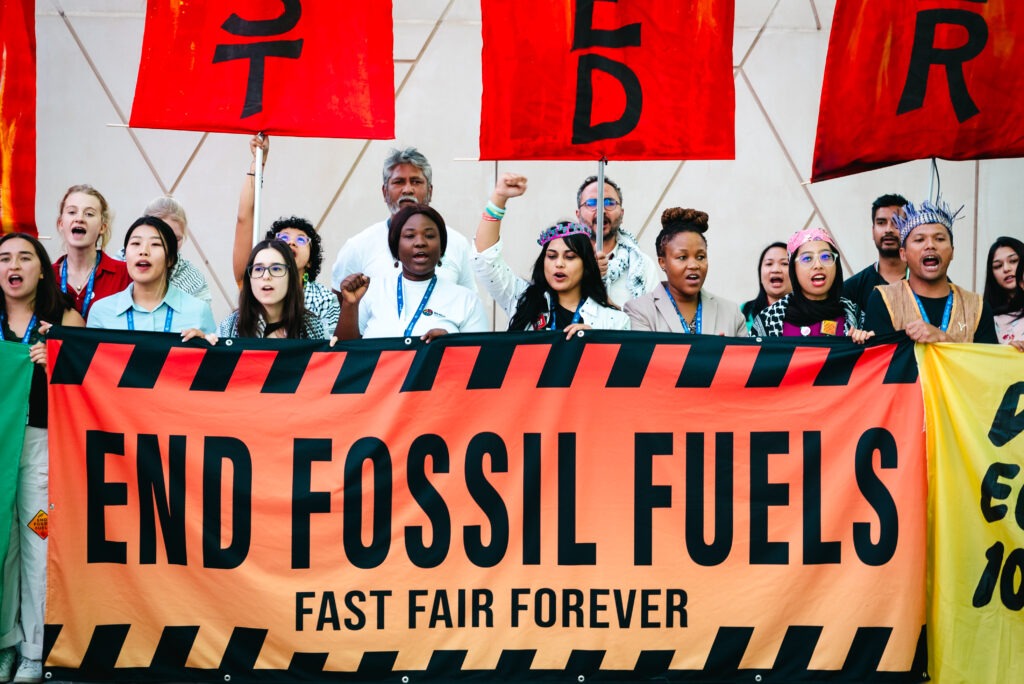
Protesters holding End Fossil Fuels banner at a climate demonstration, advocating for renewable energy solutions.

Protestors at COP 28 in Dubai. Photo: Konrad Skotnicki.

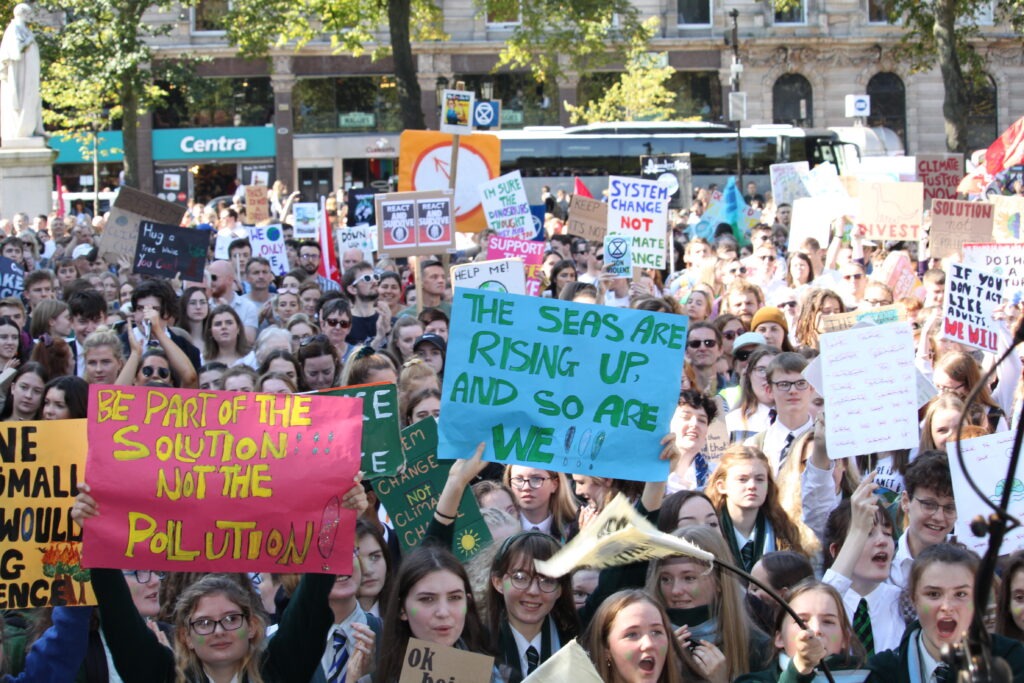
Climate protest with diverse crowd holding signs about environmental action in a city square.

Belfast Climate Change March, 2019. Photo: Trócaire.

The Profit Driving the Crisis

Despite their overwhelming contribution to global emissions, fossil fuel companies continue to attract significant financial backing—driven by their enduring profitability. This is starkly illustrated by the case of ExxonMobil, the top fossil fuel investment held by asset managers based in Ireland. In 2023, ExxonMobil reported €33.63 billion ($36 billion) in profit. That is almost twice the GDP of Botswana (€18.1 billion) and nearly three times Namibia’s GDP (€11.5 billion).

Ireland plays a hugely disproportionate role in facilitating investments into fossil fuel companies like ExxonMobil. In 2023, the investments made into fossil fuel companies by investment managers based in Ireland generated an estimated 72.5 million tons of CO2e. This is more than the CO2e emissions for the entire country of Ireland—and more than ten times that generated by Sierra Leone.

The Global Human Impact

The climate crisis is here, now, and it is causing disproportionate harm in the Global South. In Bangladesh, rising sea levels and increasingly severe cyclones are displacing coastal communities, with projections indicating that 17% of the entire country could be underwater by 2050. The legally binding Paris Agreement on climate change explicitly acknowledges the importance of tackling private finance. Its three overarching goals are: keeping below 1.5C of warming; increasing adaptation and making finance flows consistent with low emissions and resilience.

This gives a clear mandate for action:  both tax reform and corporate regulation are needed to tackle financial flows, and both nationally in Ireland and at EU level, ‘polluter pays’ taxes are lacking and regulation of the financial sector remains weak and fragmented. While EU regulation exists, it is designed more to nudge investors toward more sustainable investment practices by increasing transparency and reporting levels than to enforce strict standards. And it is moving in the wrong direction: the recently passed EU Corporate Sustainability Due Diligence Directive excluded investments; and now the EU Commission’s Omnibus legislative proposal threatens to undo the limited gains made on climate plans, as well as blocking future attempts for stronger action at national level.

The Risk of Inaction

Fossil fuel investment is too profitable to remain weakly regulated. If Ireland continues with its current strategy of encouraging FDI at all costs, and relying on weak EU regulation, we are headed for catastrophe. The Inter-governmental Panel on Climate Change has repeatedly warned that every fraction of a degree beyond 1.5°C brings irreversible consequences: collapsed ice sheets, vanishing coral reefs, and extreme weather events that will make vast regions of the planet uninhabitable. And yet, companies are developing oil and gas fields that could push global warming beyond 2°C.

Our research found that 91% of the investments made into fossil fuel companies by investment managers based in Ireland were to companies that have plans for fossil fuel expansion like these. Ireland cannot afford inaction on this issue.

About This Research

The figures in this report regarding investment from Ireland are based on new research commissioned by ActionAid Ireland and Trócaire. In the paper, we uncover the scale of fossil fuel investment through Ireland, who the investors are, and in which fossil fuel companies they are investing.  We analyse the current regulatory framework and explain why it is inadequate—and moving in the wrong direction. And we make specific recommendations for change, which are summarised below.

Summary of Recommendations

Regulate the private financial sector
Ireland must end its outsized role as an enabler of destructive fossil fuel investment. Ireland should introduce a strong gender-responsive national human rights and environmental due diligence framework which includes the regulation of investors with respect to human rights and the environment and climate. The transposition of the EU Corporate Sustainability Due Diligence Directive could achieve this if downstream activities are included and the Omnibus proposal is rejected. Ireland should prohibit investments in fossil fuel expansion and require investors to implement climate transition plans consistent with a 1.5°C climate limit.

Endorse the Fossil Fuel Non-Proliferation Treaty
Ireland should endorse developing a Fossil Fuel Non-Proliferation Treaty to curb fossil fuel expansion and commit to a fair and funded phase out of fossil fuels.

Support tax justice
Ireland should support bold and fair new global tax rules through the UN Framework Convention on Tax, should adopt all OECD BEPS measures, and should conduct an updated and comprehensive spillover analysis of its tax policy. Ireland should take coordinated action globally, at the EU level and domestically to introduce a range of new taxes to mobilise finance needed for climate justice, based on ‘polluter pays’ and social equity principles such as wealth taxes for the highest earners, climate damages tax on investors, fossil fuel production taxes and levies on aviation and shipping.

Finance a just transition
Ireland must also meet its fair share climate finance obligations under Article 9.1 of the Paris Agreement, and pay our ecological debt to the Global South. Ireland should support conditionality-free debt cancellation for countries on the front lines of the climate crisis, commit to a new UN Framework Convention on Sovereign Debt, moving debt negotiations from the IMF to the UN, and to a debt workout mechanism that is fully representative and fair.

Further reading